

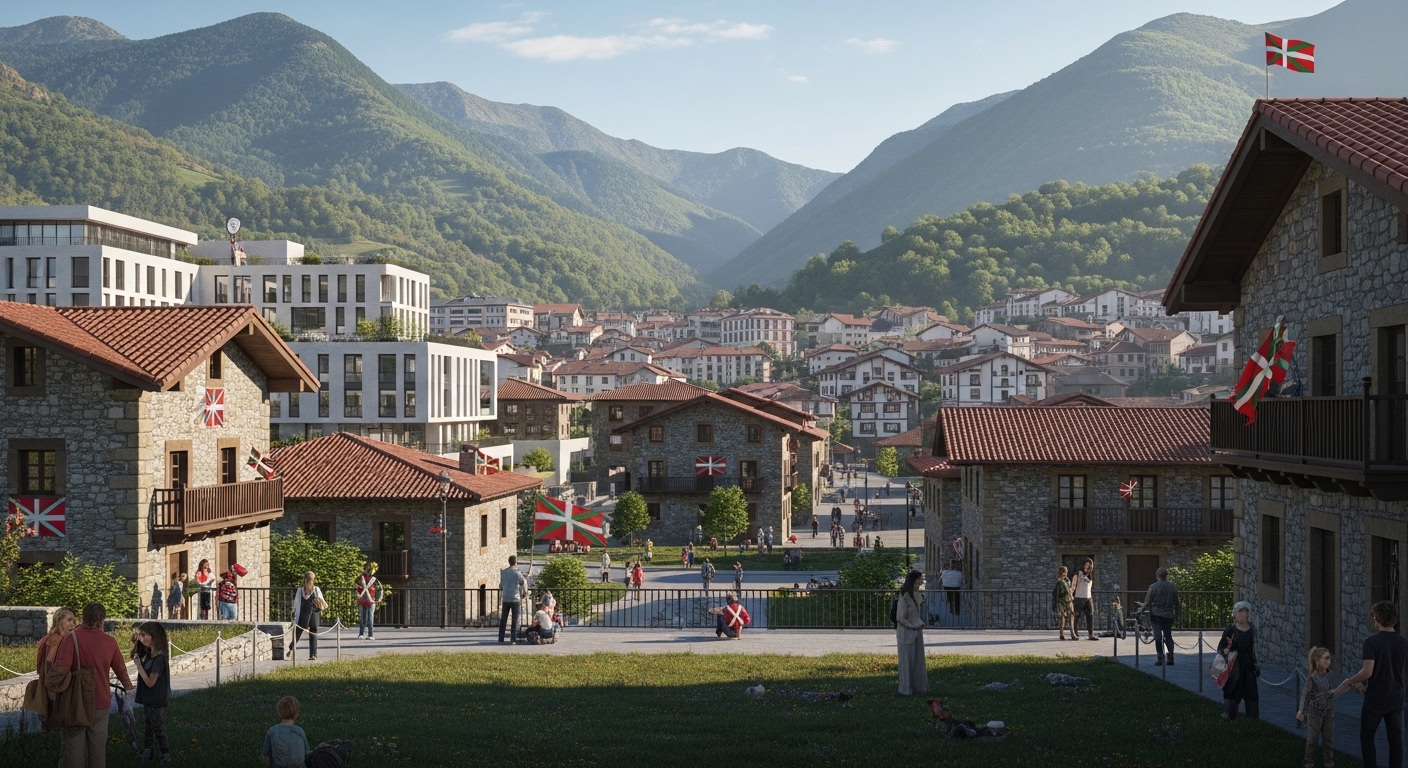
The keyword “Basqueserpartists” appears to be a niche or possibly misspelled term. Based on linguistic breakdown and contextual clues, it likely relates to one of the following:
- Basque separatists (individuals or groups advocating independence for the Basque Country)
- A cultural or political subgroup connected to Basque identity
- A misinterpreted or emerging term tied to regional activism or history
Given this, the most logical intent behind the search is informational: the user likely wants to understand who Basque separatists are, their history, motivations, and current relevance.
Who Are Basque Separatists?
Basque separatists are individuals or movements that seek independence for the Basque Country, a region spanning northern Spain and southwestern France. The area has a distinct:
- Language (Euskara, unrelated to other European languages)
- Cultural traditions
- Historical identity
Separatist ideology stems from a desire to preserve this identity and gain political autonomy or full independence.
Historical Background
Early Roots of Basque Identity
The Basque people have lived in the region for thousands of years, maintaining a unique culture even through Roman and later European influence.
Rise of Nationalism
Modern Basque nationalism began in the late 19th century, driven by:
- Industrialization in northern Spain
- Concerns about cultural erosion
- Centralized governance from Madrid
The ETA Era
One of the most well-known groups associated with Basque separatism is ETA (Euskadi Ta Askatasuna):
- Founded in 1959 during Franco’s dictatorship
- Initially focused on cultural resistance
- Later evolved into an armed militant organization
ETA carried out bombings and assassinations for decades before announcing a permanent ceasefire in 2011 and dissolving in 2018.
Modern Basque Separatism
Today, separatist sentiment still exists but is largely expressed through democratic and political channels, not violence.
Key Characteristics Today:
- Participation in regional elections
- Advocacy for increased autonomy
- Cultural preservation efforts
Political parties such as EH Bildu represent pro-independence views within legal frameworks.
Real-World Examples
1. Catalonia vs Basque Country
While Catalonia has held high-profile independence referendums, the Basque Country has taken a more gradual and politically integrated approach.
2. Autonomous Governance
The Basque Autonomous Community already enjoys significant self-governance, including:
- Control over taxation
- Independent police force (Ertzaintza)
- Education system autonomy
This reduces urgency compared to other separatist regions.
Practical Use Cases of Understanding Basque Separatism
For Students and Researchers
Understanding Basque separatism helps in studying:
- European regional politics
- Conflict resolution
- Identity-based movements
For Travelers
Visitors to the Basque region benefit from:
- Cultural awareness
- Respect for local identity and language
- Better understanding of regional sensitivities
For Policy Analysts
Basque separatism provides a case study in de-escalation, showing how violent movements can transition into peaceful political processes.
Comparison: Basque Separatism vs Other Movements
| Aspect | Basque Country | Catalonia | Scotland |
|---|---|---|---|
| Language uniqueness | Very high (Euskara) | Moderate | Low |
| Violent history | Yes (ETA) | No | No |
| Current approach | Political | Political | Political |
| Autonomy level | High | Moderate | Moderate |
Pros and Cons of Separatist Movements
Pros
- Preserves unique cultural identity
- Encourages local governance
- Can lead to tailored economic policies
Cons
- Risk of political instability
- Economic uncertainty during transitions
- Potential for social division
Common Misconceptions
1. All Basques support independence
Not true. Opinions vary widely within the region.
2. The movement is still violent
Modern Basque separatism is overwhelmingly peaceful.
3. Basque and Spanish identities are mutually exclusive
Many people identify with both.
FAQ: What People Usually Want to Know
What does “Basqueserpartists” actually mean?
It likely refers to Basque separatists, individuals advocating independence or greater autonomy for the Basque region.
Is the Basque Country independent today?
No. It is an autonomous region within Spain (and partly France).
Is ETA still active?
No. ETA officially disbanded in 2018.
Do Basque people still want independence?
Some do, but many are satisfied with the current level of autonomy.
Is it safe to visit the Basque region?
Yes. It is considered safe, modern, and welcoming to tourists.
Final Thoughts
“Basqueserpartists” may not be a formally recognized term, but it points toward a rich and complex political and cultural topic. The story of Basque separatism is no longer dominated by conflict, but by negotiation, identity, and coexistence.
Understanding it offers a window into how regions balance tradition, autonomy, and modern governance—a challenge that continues to shape societies around the world.
